Endoscopic Transforaminal Disc Removal and Reconfiguration
Source: Spine Disorders 1996 Annual Meeting
Publisher: The Joint Section on Spine and Peripheral Nerves
Major subject: Spine and Peripheral Nerve
Publication type: Paper
Date of publication: Feb 1996
ISSN:
Abstract:
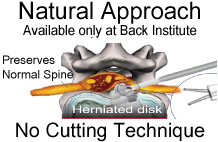
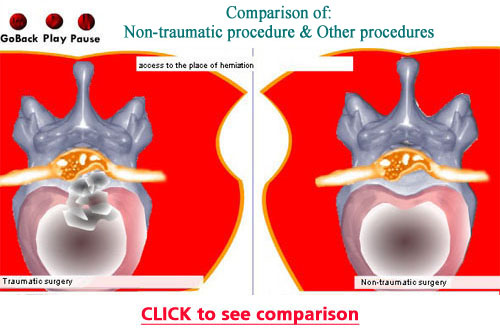
Over the past 5 1/2 years, 502 outpatient percutaneous discectomies performed under local anesthesia by this author, using various equip-ment, were analyzed. Of these, 79 patients had flexible endoscopic transforaminal procedures, forming the basis of this study. These are the first reported cases of working channel transforaminal spinal endoscopy performed with an endoscope which flexes up to 90 degrees and passes through the foramen to remove free fragments and reconfigure disc, relieving root and dural displacement.
Access is obtainable to the lateral recess and other locations within the spinal canal previously thought only reachable with open surgery. The working channel endoscope consists of a 2.8 mm flexible plastic tube, with fiberoptics in the wall providing 12,000 pixel resolution.
All patients had sciatica for several months to many years and failed conservative care. All patients had positive MRI or CT scans and lumbar disc rupture findings (straight leg raising, motor, sensory, or reflex abnormalities). The 79 patients ranged in age categories as follows: 36 patients (20-40 years), 35 patients (40-60 years), and 8 patients (over 60 years). Of the 79 cases, 71 were successful and 8 failed; success rate 90%. The patients were followed postoperatively up to 5?years. "Successful" patients continued to meet all these criteria: 1) Completed post-operative evaluation form, rating result "successful" or "total cure." 2) Reported increase in functional capability. 3) Tension signs resolved. 4) Taking no pain medication.
Of the eight failures, one HIV-positive patient (40-60 age range) developed a staph discitis which responded to antibiotics, four (40- 60 age range) were not improved and required laminectomy, and three (20-40 age range) opted to live with their status rather than have more invasive procedures. In conclusion, this transforaminal approach increases the effectiveness and range of application of endoscopic techniques.
Copyright © 1996 The Joint Section on Spine and Peripheral Nerves.
All rights reserved.
|